
Top 5 Ways to Start Your Spring Pickleball Season Strong
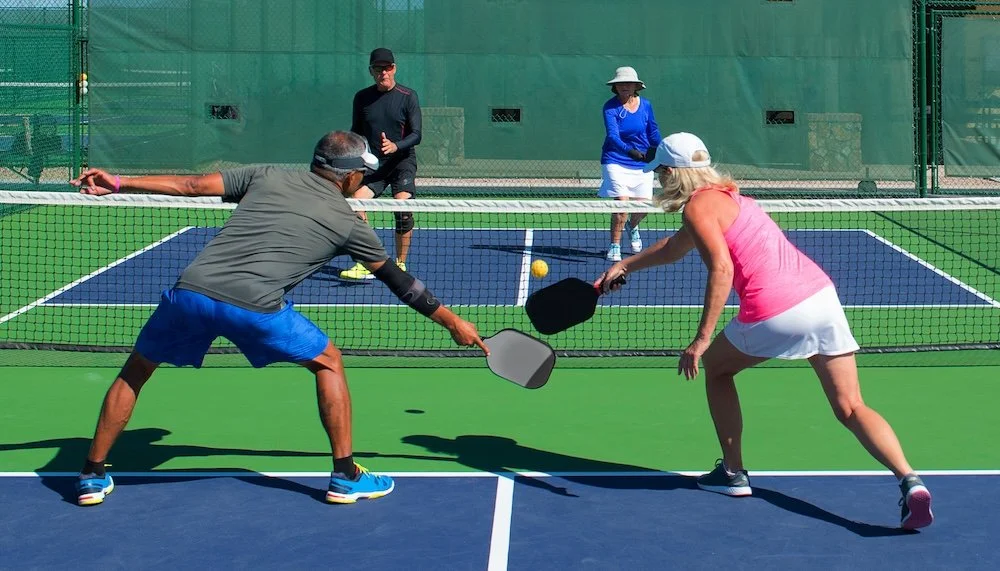
Spring pickleball season is just around the corner—and whether you’re playing a few times a week or jumping back in after winter, starting NOW with a little preparation can go a long way. Most pickleball injuries we see are sprains, strains, falls, and overuse issues, and many are preventable with the right approach.
Here are our Top 5 recommendations to help you stay healthy, confident, and on the court this season.
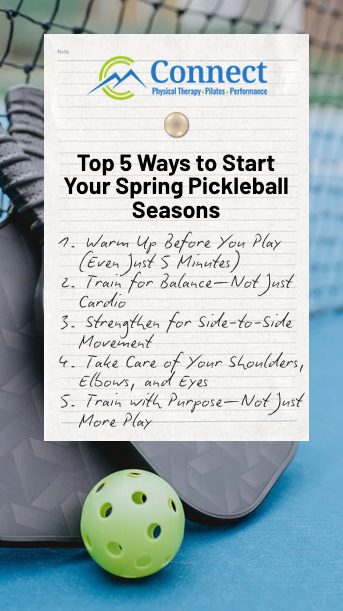
Top 5 Recommendations for Pickleball from a PT:
1. Warm Up Before You Play (Even Just 5 Minutes)
Cold muscles and stiff joints don’t respond well to quick lunges or fast direction changes. A short, dynamic warm-up helps your body react faster and reduces the risk of strains—especially in the calves, hamstrings, shoulders, and elbows.
Think: light movement, gentle range of motion, and getting your heart rate up before the first serve.
2. Train for Balance—Not Just Cardio
Falls are the most serious pickleball injuries, especially for adult players. If you’ve ever felt unsteady reaching wide for a ball or stepping backward, that’s a sign your balance system needs support.
Balance and reaction training improves:
Stability during lunges and quick steps
Confidence when reaching or changing direction
Fall prevention
This is one of the most overlooked—but most important—parts of injury prevention.
3. Strengthen for Side-to-Side Movement
Pickleball isn’t just forward and back—it’s all about lateral movement. Strong hips, knees, and ankles help protect against sprains and knee pain during shuffling, pivoting, and quick stops.
Targeted strength training can:
Reduce ankle and knee injuries
Improve quickness on the court
Help your joints handle repetitive play
4. Take Care of Your Shoulders, Elbows, and Eyes
Repetitive swings put stress on the shoulder and elbow, especially when playing multiple times per week. Supporting these areas with strength and mobility work can help prevent tennis elbow and shoulder irritation.
Also worth noting: eye injuries are on the rise in pickleball, particularly in doubles play. Protective eyewear is a simple step that can reduce risk.
5. Train with Purpose—Not Just More Play
One of the biggest reasons injuries happen is that players play a lot—but don’t train for pickleball.
Our Pickleball Conditioning Workshop at Golden PT & Pilates is designed specifically to support:
Strength and stability for pickleball movement
Balance and fall prevention
Shoulder health for repetitive swings
Safe agility and quick-reaction training

Golden PT & Pilates
Led by physical therapist Nancy Gonder, MSPT, this small-group program blends physical therapy expertise with Pilates-based conditioning to help you play better, move safer, and stay injury-free.
Pickleball is an incredible way to stay active, but it places real demands on your body—especially as we play more often or get back into the season quickly. With smart warm-ups, balance and strength training, and purposeful conditioning, many common injuries can be avoided.
At Golden PT & Pilates, our goal is simple: help you keep playing the sport you love—strong, confident, and for years to come.