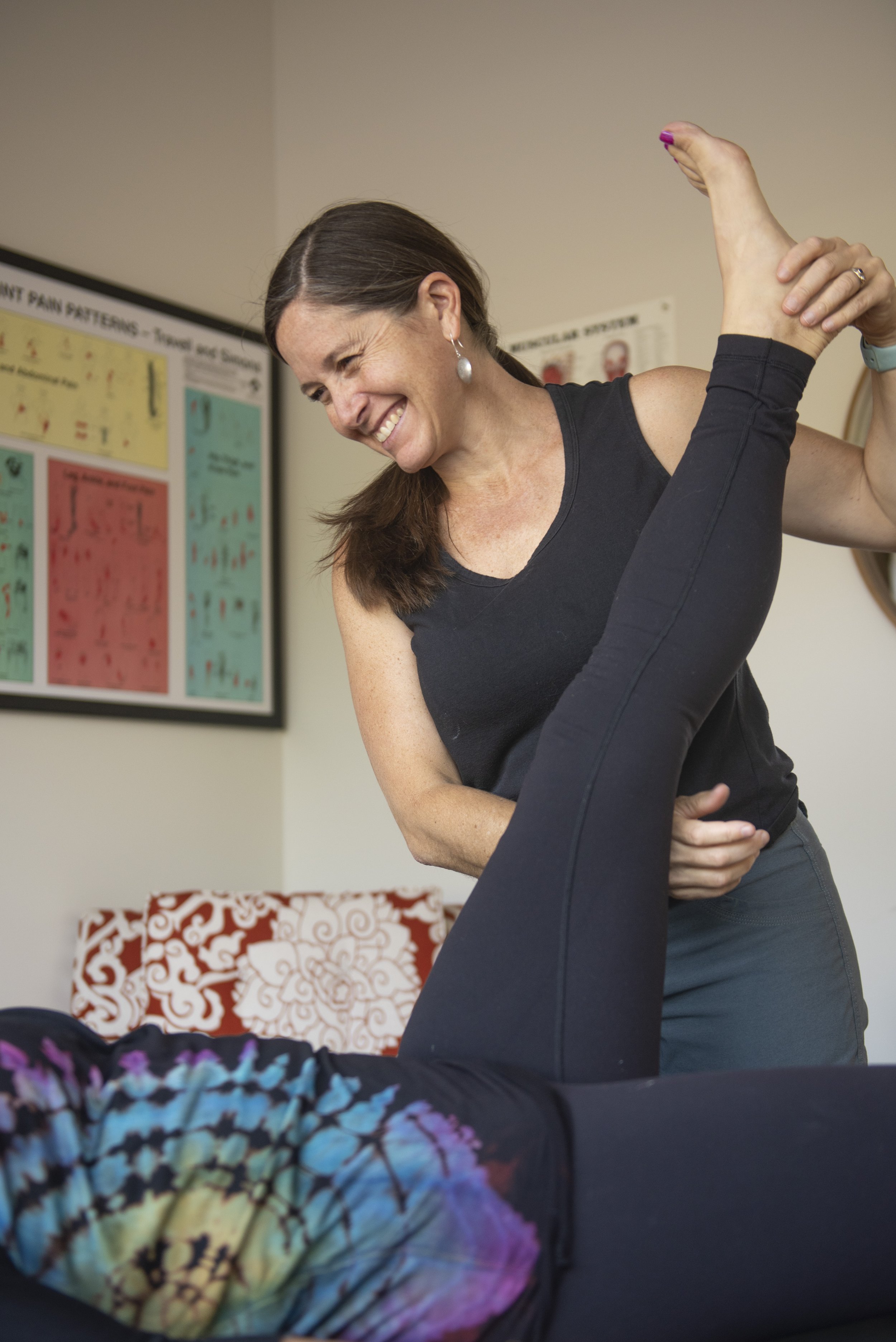
Recover Better: 5 Post-Workout Stretches Every Active Adult Should Know
One of the most common questions we get is: “Should I stretch before or after exercise?”
The short answer: both can be helpful—but they serve different purposes. Before activity, your goal is to prepare the body for movement. That means increasing blood flow, waking up muscles, improving joint mobility, and priming your nervous system for performance.
Dynamic movements—like leg swings, walking lunges, arm circles, or bodyweight squats—help your body gradually ramp up and get ready for the demands of exercise.
Static or passive stretching (holding stretches for longer periods) is different. While passive stretching can improve flexibility over time, doing long-held stretches immediately before running, hiking, biking, or strength training may temporarily reduce power output or force production—especially if the stretches are aggressive or prolonged. For this reason they are no longer recommended by American College of Sports Medicine before activities.
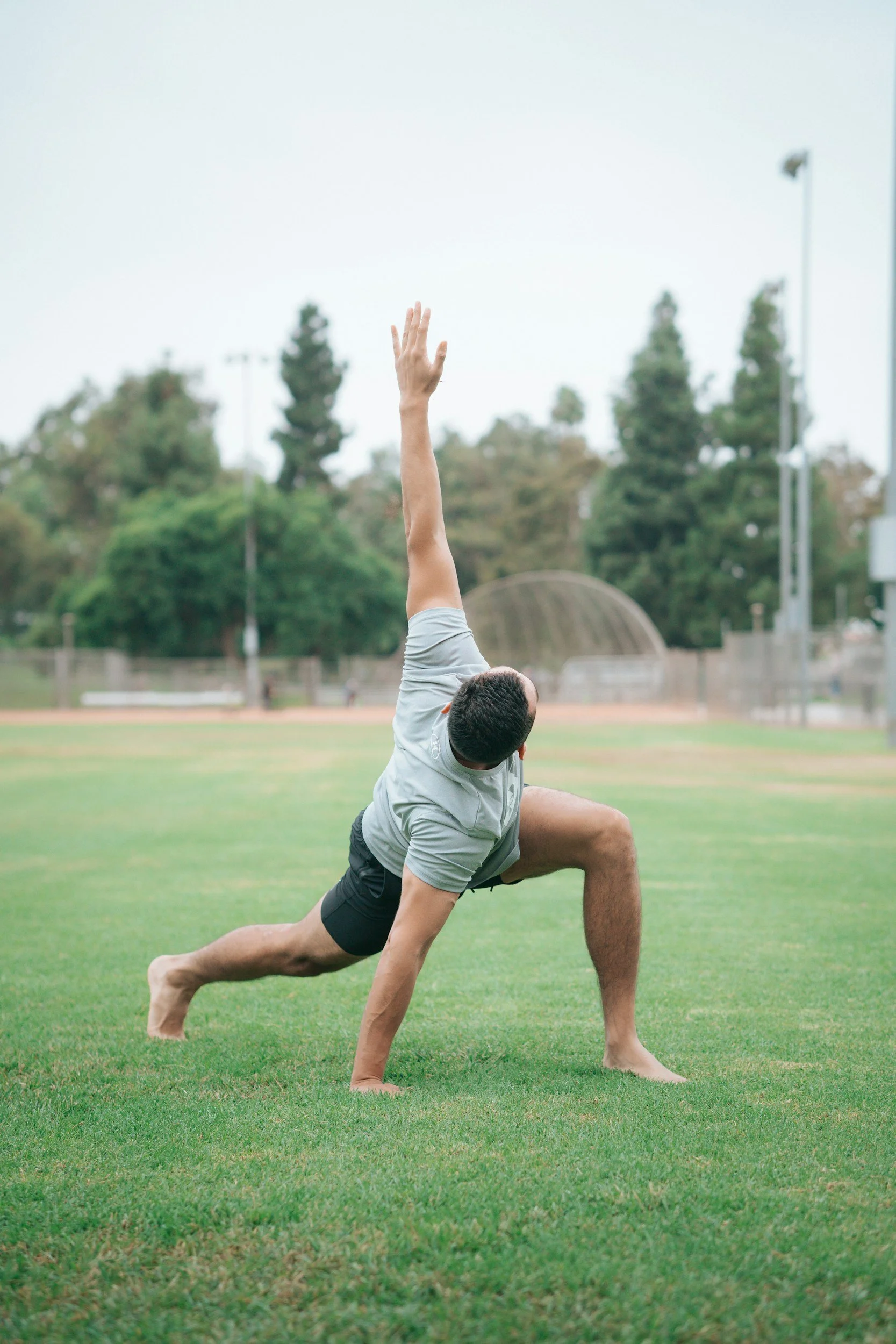
Before exercise → Dynamic movement
After exercise → Passive stretching
After exercise, your body is still in a heightened state.
Your heart rate is elevated.
Your breathing is faster.
Your muscles and nervous system are still “on.”
This is where post-activity stretching becomes especially valuable. Gentle stretching after activity helps signal to your body that it’s time to shift out of performance mode and into recovery mode. From a nervous system perspective, this means moving from a more sympathetic state (“go mode”) toward a more parasympathetic state (“recovery mode”). In simpler terms: stretching can help your body downshift.
When paired with slow breathing, post-exercise stretching may help:
Reduce muscle tension
Improve relaxation
Lower stress levels
Support recovery
Leave you feeling less stiff and more restored
This is especially important after repetitive endurance activities like running, hiking, cycling, or long backpacking days, where the body can stay in a prolonged state of muscular tension.
Even 5–10 minutes of stretching and slow breathing can make a noticeable difference in how you feel later that day—and often the next morning.
Stretching after activity won’t solve everything, but it can help you move better, recover more comfortably, and feel more prepared for your next workout. Think of stretching as maintenance for an active body. Your body works hard for you—give it a few minutes of recovery.
Frequently Asked Questions About Stretching After Exercise
1. How long should I stretch after a workout?
You don’t need a long recovery routine to get benefits.
We typically recommend spending 5–10 minutes after activity, focusing on the muscle groups that worked hardest. Hold each stretch for about 30–45 seconds, and repeat 1–2 times as needed. Consistency matters more than duration.
2. Should stretching hurt?
No. A stretch should feel like gentle to moderate tension, not pain. You should never feel sharp, burning, or intense discomfort. If a stretch feels painful, back off and reduce the intensity.
A good rule: stretching should feel relieving—not aggressive.
3. Will stretching prevent injuries?
Stretching alone is not a guarantee against injury. Research shows that stretching by itself does not significantly reduce injury risk. However, maintaining good mobility can help reduce movement restrictions and improve how your body handles repetitive stress.
The biggest factors in injury prevention are:
Strength training
Recovery
Training progression
Sleep and overall stress management
Good movement mechanics
We think of stretching as one piece of a bigger recovery plan.
4. Can stretching reduce soreness?
Stretching may help reduce feelings of stiffness and improve comfort after exercise, but it won’t completely eliminate soreness. Post-exercise soreness (especially delayed onset muscle soreness, or DOMS) is often related to how hard or how differently you trained.
Stretching can help you feel looser and move better, especially when paired with:
Walking
Hydration
Sleep
Recovery exercise
Light mobility work
5. When is the best time to stretch after exercise?
The ideal time is within 5–30 minutes after activity, once your workout is complete and your muscles are still warm. However, later is still better than not at all. Stretching in the evening after a morning run or bike ride can be beneficial.
6. Is it better to stretch or foam roll after exercise?
Both can be helpful—they simply serve different purposes.
Foam rolling: Helps reduce muscle tension and improve tissue mobility
Stretching: Helps improve flexibility, mobility, and relaxation
For many people, the best recovery routine includes a combination of both.
7. What if I only have time for a few stretches?
That’s completely fine. You don’t need to stretch everything every time. Focus on the areas that feel most tight or overworked.
For most active adults, these are often:
Calves
Quads
Hips
Chest/upper back
Spine
Even 2–3 focused stretches can make a meaningful difference.
8. Should I stretch every day?
Not necessarily—but regular mobility work is helpful, especially if you’re active most days of the week. If you run, hike, bike, strength train, or sit for long periods, daily stretching or mobility work can help offset stiffness and improve recovery. Think of it like brushing your teeth—small, consistent habits work best.
Ready to move smarter and recover better? We're located in downtown Golden, CO — where licensed physical therapy and Pilates work together to keep you strong for the runs, rides, and trails you love.

In health,
Dr. Carrie A. Lamb, PT, DPT, OCS
Owner & Founder, Golden PT & Pilates
Balanced Body Educator Pilates Mat, Reformer, CoreAlign® and MOTR®
Konnector® Educator
Nationally Certified Pilates Instructor- PMA